

CSI Companies Insights

Real-World Insights to Power Healthcare Transformation
Explore expert insights in Healthcare IT consulting, hospital staffing solutions, and industry news. Here, we share how we help healthcare organizations solve challenges, streamline operations, and deliver better care.
Healthcare IT and EHR Trends to Watch in 2026: What Healthcare Leaders Need to Know
In 2026, healthcare organizations are entering a pivotal new phase in the evolution of the Electronic Health Record. What was once viewed as a system of record is rapidly becoming the operational core of the enterprise where artificial intelligence, clinical efficiency, workforce sustainability, and operational performance intersect. Modernization must be treated as an ongoing discipline rather than a one-time initiative.
Epic Refuel Explained: Returning to a Strong Foundation for Long-Term EHR Success
Reimagining Your Epic System to Support Clinical, Operational, and Revenue Cycle Success Imagine an Epic system that runs smoother than ever. Clinicians chart more efficiently, patients receive seamless care, reporting enables, more intelligent decisions, and revenue cycle functions require less labor. That’s the promise of an Refuel project when it’s done right. For health systems balancing innovation and stability, Refuel is a holistic method to reset, realign, and realize greater value from their EHR investment.
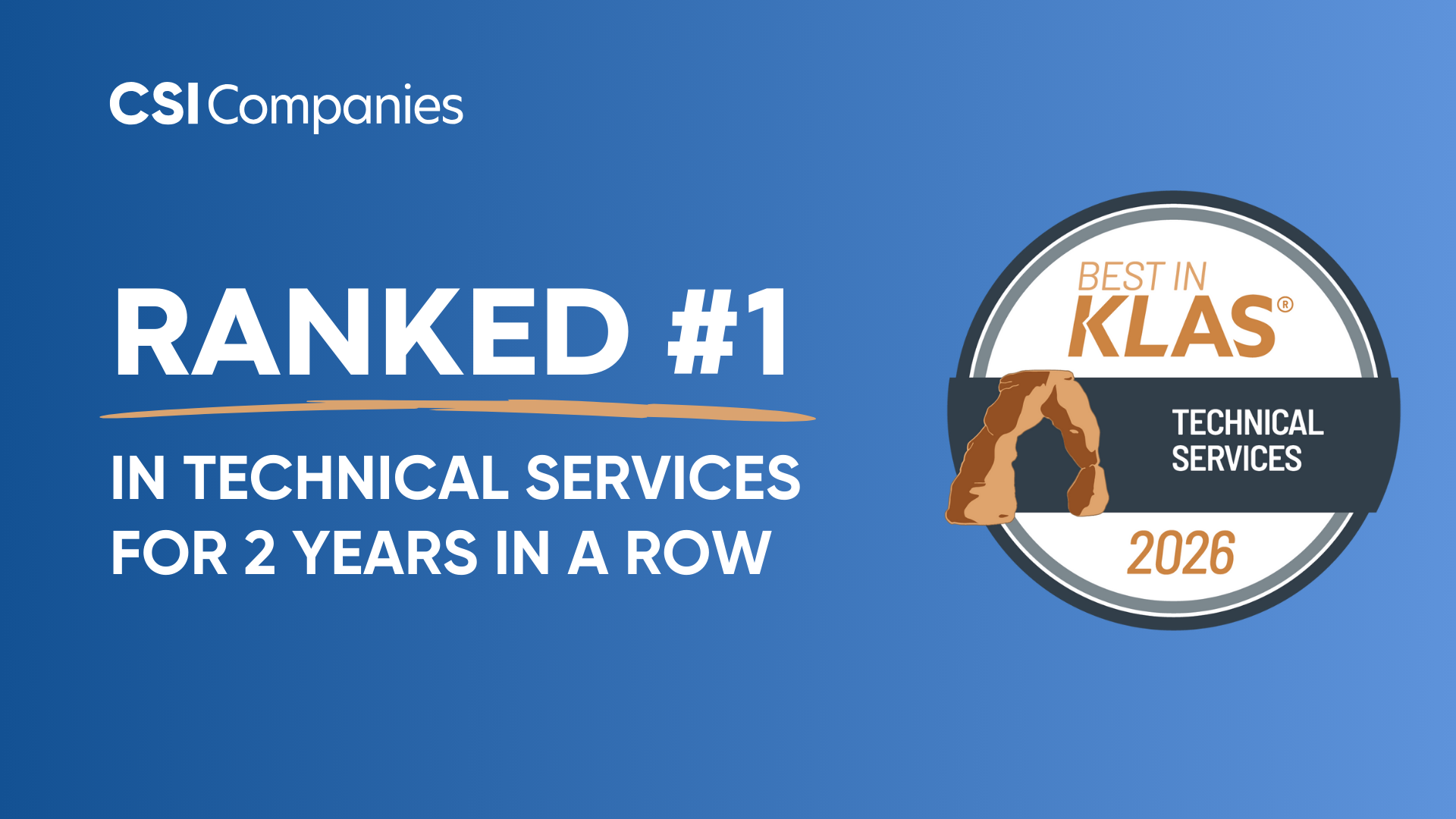
CSI Companies Named 2026 Best in KLAS for Technical Services for Second Consecutive Year
CSI Companies announced today that it has been named 2026 Best in KLAS for Technical Services by KLAS Research, marking the second consecutive year the company has earned this recognition in the Best in KLAS: Software and Services Annual Report. The Best in KLAS designation for Technical Services recognizes the delivery of consistent, high-quality support across data management, data migration and conversion, system integration, interfacing, and technical system support.
“This award is especially meaningful because it’s based on direct feedback from the people we serve,” said Kate Mays, Chief Operating Officer at CSI Companies.
Post-Go-Live EHR Training: How Workflow-Based Optimization Reduces Provider Burnout
Why Provider Burnout Often Increases After EHR Go-Live The period immediately following an EHR go-live is one of the most critical yet one of the most misunderstood phases of an implementation. While leadership teams often anticipate a temporary learning curve, many are surprised when provider burnout intensifies in the weeks and months after launch. Productivity dips, documentation takes longer, inbox management becomes overwhelming, and providers report feeling frustrated, inefficient, or even less confident in their ability to deliver timely, high-quality patient care. Most organizations rely heavily on standard End User Training (EUTS) or vendor-led classes during implementation.
Why Smarter EHR Training is One of the Most Effective Strategies for Reducing Provider Burnout
Clinician burnout isn’t just a wellness issue; it’s an operational and financial one. When providers leave due to frustration with technology or inefficient workflows, the impact extends far beyond morale. Burnout disrupts revenue, strains patient care, and destabilizes entire care teams. Amid the many pressures health systems can’t control, one lever consistently delivers measurable results: better, more innovative EHR training.
The Truth About EHR Training: How Common Misconceptions Contribute to Provider Burnout
When healthcare leaders think about EHR training, they often picture a classroom, a few manuals, and a trainer walking clinicians through button clicks. That outdated model no longer meets the complexity of today’s workflows or the urgency of addressing provider burnout. According to KLAS Research, clinician turnover costs health systems anywhere from $56,000 for nurses to over $1 million per physician. The implications are clear: getting EHR wrong is expensive. Getting it right is transformative.

Why Set Goals for 2026?
As the New Year approaches, many of us look back on where we’ve been and start imagining where we want to go next. Setting goals isn’t just about writing a checklist for the year; it’s about defining who you want to become and intentionally shaping the life you want to live. Thoughtfully chosen goals will give your year direction, meaning, and momentum.
EHR Implementation 101: What Every Healthcare Leader Needs to Know Before Go-Live
Electronic Health Records (EHRs) have transformed healthcare delivery over the last two decades. From improving care coordination to streamlining clinical workflows, EHR systems are now a foundational part of how hospitals and health systems operate. While the benefits are clear, the journey to EHR adoption can be complex.

EHR Go-Live Jargon Decoded: Key Terms Every Healthcare Leader Should Know Part 2
An FAQ-Style Glossary for EHR Go-Live Success When it comes to implementing an Electronic Health Record (EHR), one of the biggest challenges isn’t just technology, but also terminology. From “Big Bang” to “Downtime Planning,” the industry is filled with Jargon that can easily overwhelm even the most seasoned healthcare leaders. This is an easy reference guide that breaks down the most common and most misunderstood terms used before, during, and after go-live. Whether you’re a hospital executive, project manager, or clinical leader, understanding this language helps ensure smoother communication, better planning, and stronger outcomes.

5 Expert Tips for Electronic Health Record Go-Live Readiness
For healthcare organizations, an Electronic Health Record (EHR) go-live isn’t just a date on the calendar; it is a turning point. A successful go-live sets the tone for operational continuity, and long-term system adoption. When done right, it safeguards clinical workflows, boosts end user satisfaction, and drives ROI on your EHR investment.